This morning shake is my go-to breakfast that I prepare for myself and my husband in less than 5 minutes. I’ve found it to be perfect for my low-budget healthy diet plan. Here’s how you make it:
First you add about a ½ cup of frozen fruit. I usually use blueberries since they taste great and are cheapest by the pound where I live but you can pick any fruit or blend you like.
Next you add 1 cup of almond milk. You can swap this for any milk/milk alternative but almond milk is again the cheapest and has the lowest calorie count out of the milk options.
Next you add your scoop of protein powder. Since I am trying to lose weight and focus on protein consumption I went with this vegan chocolate protein powder. Everyone has different goals though, so I suggest you research and pick what would be best for your diet and goals. For instance my husband is focusing on weight gain, so I put mass gainer in his shake.
Then you add about a ½ cup of spinach. I like to freeze a bunch for easy preservation and storage.
Lastly you add water to the fill line so the shake isn’t too thick then blend.
This is the most bare-bones version of the shake I make. Some other foods I like to add are:
a banana – personally I prefer to save the banana for it’s own snack, but it’s a great addition to the shake
oatmeal – you can use either a ⅓ cup of oats or a pack of instant oatmeal for some nice flavor (just be sure to blend well!)
olive oil – it may sound odd, but adding a tablespoon or so of olive oil is perfect for those looking to add more fat to their diet or to gain weight
peanut butter – a great flavor boost that’s high in fat
fruit juice – instead of topping with water you can use fruit juice, just be aware of how sugary it can be
honey – if you need more sweetness honey is a great natural option for it’s nutrients and antioxidants
coffee – for coffee lovers adding about a cup or an espresso shot makes for a nice all-in-one morning drink
I hope that you enjoyed this recipe. Please follow for more wellness tips if you’d like to see more!
After experiencing a chaotic period of time in my life I went into a depressive state for several months. Yoga was the one habit that pulled me out of that rut and set me on a path to a balanced life.
According to numerous sources (including Healthline) a regular yoga practice has been found to improve mental health, decrease stress, and even help with burnout. It also has countless physical health benefits.
Doing yoga daily has no doubt improved my awareness of the power and energy my body has and I’ve gotten to the point where if I skip it for even a day I begin to feel blocks in the flow of energy. It is shocking to think about how blocked up, tight, inflamed, and stressed I had been before.
The best thing about yoga may be the fact that it is so accessible. There are many online Yogis on YouTube. The teacher that I am following now is Adriene Mishler of Yoga with Adriene. Every month she posts calendars that link to daily videos following a theme.
This January I invite you to do the 30 Day Yoga Journey with me. Maybe you can make it your 2023 New Year’s resolution. See if a daily practice can turn into a beautiful and essential lifelong habit.
Since 2019 I’ve been exploring how to use different planners and journaling systems and I’ve (finally) decided on what planners and journals will be a part of my routine in 2023. Here is the lineup, going from smallest to largest:
This cute little notebook is what I use for a simple desk task list. I set it right under my monitor so I can see what tasks I have to do for the day and easily add/edit/mark off what I’ve done.
Using To-Do lists have many benefits, such as reducing anxiety and giving structure to the day so you can use your mental energy on bigger and more important things than keeping track of every little thing in the day.
When I saw this lovely little pocket notebook in the bookstore I couldn’t help myself. It is a simple planner with a week spread on one page and a botanical illustration on the other.
This neat little book is from a friends Redbubble store – when you’re able, support local artists! There isn’t anything particularly special about the inside, but I figured that having a completely blank page gives me more room for my thoughts and feelings that may come up during therapy.
This cute notebook is what I use for my notes from studying tarot & for journaling about my tarot readings. A ritual that I’ve found great for connecting to my intuition via journaling is a daily tarot reading. All of my thoughts and findings are logged in this journal. I look forward to filling these pages!
My main journal is this cute A5 genuine leather notebook. Here there are no rules except to put the date on the top line of whatever I’ll be writing or drawing.
It is no secret that journaling can help with mental health by managing anxiety, reducing stress, and coping with depression. Adding daily journaling to your routine can bring more awareness to what is and isn’t working for you in your life and therefore make way for positive change. 🌅
I’ll be making posts on the Hobonichi & all of the other journals so if you’re interested in tips on wellness, productivity, and creativity follow my blog and subscribe to my YouTube channel.
Tarot may seem like some mystical way of telling the future, but it is in fact a tool to understand and confirm your own intuition. In this post I’d like to share a daily ritual that invites you to let your intuition guide you and deepen the connection to your soul.
In the past year I went through a terrible state of burnout and depression and I need to find myself – my purpose – again. I began to explore meditation and begin a daily practice of yoga which helped make my mind and body more aligned, but I was still missing something to tether my spirit to the present.
I’m not sure what drew me to tarot – perhaps the very cute display at my favorite shop in Brooklyn – but when I bought the cards and began to read Guided Tarot for Seamless Readings by Stefanie Caponi I knew that this was a path that would finally let me get in touch with my spiritual side. After studying the history, uses, and cards in the tarot deck I began a simple practice of daily readings.
Set up a comfortable space that gives you positive or calming energy.
Cleanse the deck’s energy by hovering over incense or candle smoke (you may also use a clear quartz crystal).
Take deep breaths as you shuffle the deck with your hand of action (your dominant hand) and ask yourself “What does the universe need to tell me today?”
Once you find that your energy is fluid with the deck, draw one card using your hand of intuition (your non-dominant hand)
Take in the imagery of the card. Even if you don’t know the traditional meaning, observe what first comes to mind. Then look up the meaning if you are not familiar.
Write a journal entry using the card as a prompt.
After doing this consistently for a few weeks I noticed that I was much more mindful about the issues that my subconscious was lingering on. Some days you may draw a card that can seem completely random too – in these cases it can bring to light things that have been long forgotten or rarely touched upon. This practice also has the added bonus of reviewing the meaning of cards every day so that you hone your tarot skill even further.
My journey with tarot has just begun and I will be posting about it on my blog. Please follow me if you have any interest in improving your life through tarot, wellness, creativity, and productivity. Also feel free to comment about insights you’ve had or questions.
For my final week of my exploration of Audio & Video Production, I filmed & edited the mini-documentary I had planned last week.
Reading & Writing: A Reflection on My Practice
To wrap up my study of Tom Schoreppel’s book The Bare Bones Course for Film and Video I read his final words on page 141. In these, he explains that all art is subjective, but the basic principles that he wrote about and that I have studied in the last 6 weeks are what is known to work.
Since I was already accustomed to audio & video production, this course served more of a practice than a learning experience. I believe that I have improved my pre-production process and therefore the productions go much more smoothly than they had in the past.
However, I would like to take Schoreppel’s advice and begin to explore “going all artsy-craftsy” – I want to create a distinctive creative tone that is a part of my future works that goes beyond the basics. I was especially inspired to do so because of the subject of my mini-doc and close friend (seen below). Like her, I want to be more confident in my creativity and use it to change the world for the better.
Research to Inform: J & L Cuts
In editing, J and L cuts make for a smoother transition from one image to the next by overlapping the audio from the previous or following shot.
In this VICE video, there is the first L-cut at 0:22 when the images break away from the journalist to shots of the crowd while he is still speaking. At 15:12, there is an example of a J-cut, where the images continue to be shots of the city streets as the journalist begins to speak, then cuts to him speaking shortly after. I think these cuts make the story flow smoothly with imagery. Of course, it also serves to cover-up any cuts during the standup that they made.
These cuts are also effective in transitioning between scenes. In this clip from Shawshank Redemption (1994) at 1:36 when the warden is looking through the hole you can begin to hear sirens before the road and the police cars are shown. This is a very common type of edit to bridge between connection events – in this case they discovered his escape, so police cars were dispatched.
Create: Choose Your Battle
For my mini-doc I interviewed Juliet Royster about her nonprofit called Choose Your Battle that sponsors the education of young Rwandans. There were a few road bumps that I had to go through with the production, but overall I think it turned out very well. I hope you enjoy!
This is my final week of college so I would like to use this post for a moment of reflection. For my first graduate class I created a whitepaper on Deep Work in Documentary Production. I will be analyzing how this advice has worked for me so far and some new things that I have learned since then.
A Distracted World
In the whitepaper, I explain how the “attention economy” is enveloping more and more of our time. With the pandemic, things have only gotten worse.
When working at home or in a personal office, like many documentary producers do, it is even more difficult to avoid distractions. Through your computer you have access to hundreds of social and informational sites within seconds. Even away from your desk, your phone is a tether to constant connection and distraction.
In 2020 and 2021, it is not only documentary filmmakers who are staying at home – it jumped to 71% because of the pandemic. Working from home is not a bad thing, it can actually make your time a lot more productive – if you take the right steps to ensure that you do not get trapped by the only increasing distractions.
How to Do Deep Work
So how can we work from home, or anywhere, distraction-free and fully focused?
The first step is to decide what your deep work schedule looks like. There are three different types of schedules; bimodal (taking a chunk of days to focus on deep work), rhythmic (carving out time within specific days of the week), and a hybrid of the two. I had concluded that the hybrid schedule is best for documentary production where you can use the rhythmic philosophy for the “shallow work” of documentary production and the bimodal philosophy for “deep work”.
Having planned, filmed, and edited a documentary since that time I think that the “best” schedule depends on who you are and how you work. The bimodal philosophy can be extremely draining when you dive fully into a project and nothing else for a few days. I had done two very taxing shoots that would be in the category of bimodal and I can honestly say that it was not a stable way of working for me.
When I was editing my film, I tried the rhythmic philosophy: every morning I would get up at 5:30 AM to do another cut of the film. I would usually be done by 10 so I was able to use the rest of the day to attend to my other habits, duties, or shallow work.
Part of the reason that this was such a productive time for me was because I did this work in an uninterrupted and distraction-free environment. The apps on my phone would be locked (and I would use my phone for a Pomodoro timer) and my only task was editing – work that is definitely valuable and deep.
When to Do Deep Work
Carving out a chunk of the morning for deep work is no small task.
We only have 24 hours in the day, so we must make the most of it. Many people make the mistake of seeing the eight or nine hours they spend at work as the day and the time before and after it as bookends when we have nine more hours of conscious time to do with as we please.
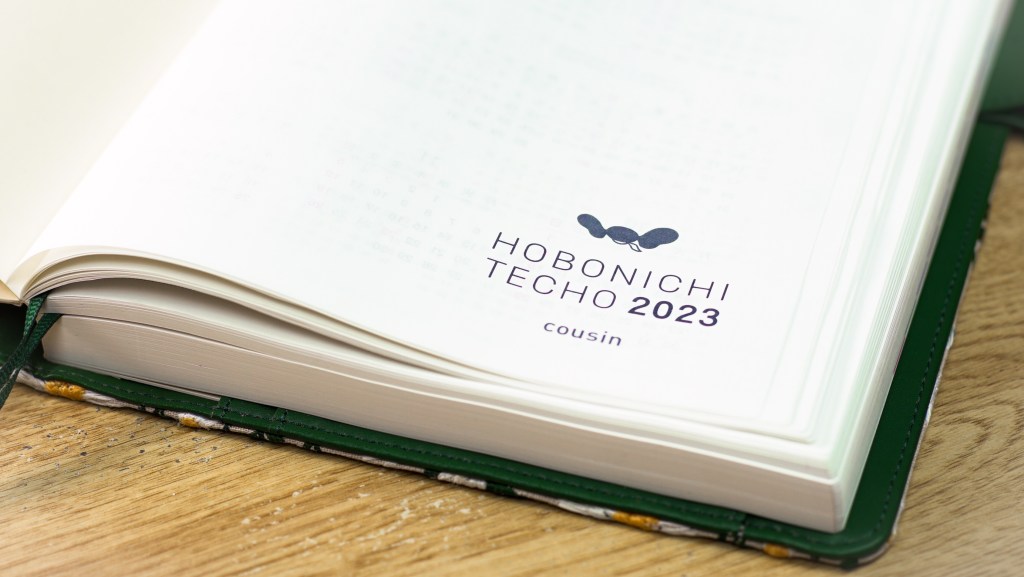
The easiest way to make sure that you actually take advantage of each hour of the day is to find a proper planning system where you can plan exactly how you spend all of your time. While in my whitepaper I suggested using Trello, I have since moved to a physical planner, namely the Hobonichi Cousin.
Another tactic that I am still getting used to is living by the “hell yes!” or “no” methodology. I have been so close to burnout several times in the last few years, mostly because it is difficult for me to say no to opportunities that I am offered. (Actually, just last week I accepted two freelance gigs for the week of my finals – had I reminded myself of this method, I would not be writing this blog at 1 AM and two days late.) Really I need to practice what I preach, so this is a reminder for myself as well: only say yes when it is a hell yes, otherwise say no thank you.
Why Deep Work is Important
Deep Work is not only valuable in the sense that it creates something that is useful, entertaining, and unique; it gives the person doing the work purpose. In the whitepaper I talk about Steven Pressfield’s The War of Art and how it addresses the pain of facing resistance – a resistance that is strong, brutal, and ever-present – in order to create your life’s work.
Ask yourself ‘if I were the last person on earth, would I still want to be doing this?’ If your answer is yes, then you know that you can and will face any resistance necessary to create meaningful and irreplaceable work.
As my job search begins, I must keep this vital question in mind. I genuinely want to do work that is meaningful and that can allow me to make change in the world. I want to work somewhere where I am willing to face the resistance every single day with pride and courage. After reflecting on my whitepaper and the experiences I have gone through to get to this point, I am ready and more excited than ever.
This week I began the pre-production phase for my mini documentary.
Reading & Writing
To begin my research on the production of my mini-doc, I began by reading the chapters about lighting and “getting it done” from Tom Schroeppel’s The Bare Bones Course for Film and Video.
Lighting is something that sets apart an ammeter from a professional when it comes to the visuals in a film or video. In the past I have gone without it, but I recently purchased two LEDs (plus my bouncer) for a basic 4-light setup. This 4-light setup consists of:
Key light: the main light which is 45 degrees to either side of the subject
Fill light: on the opposite side of the key; used to fill in shadows (but leave enough to imply depth)
Backlight: set behind the subject towards the camera to make an outline separating the subject from the background
Background light: a soft light facing the background to add some depth
More common types of interior lights include focusing quartz lights, which are much like spotlights, broads, which are wider and softer, and softlights, which are broads that have a built-in bounce. All of these lights can (and the first two should) be adjusted to be softer and avoid hot spots by using a diffuser or bouncing it off the ceiling or floor.
If you are filming outside, it is best to shoot when the sun is under 45 degrees from the horizon – otherwise there can be harsh and odd shadows cast from the overhead sun. It is also a good idea to bring a portable light or reflector to fill in the shadows that may be cast so that your subject doesn’t have to stare directly into the sun.
Planning a shoot is vital to making the day go smoothly. It is best to approach a shoot knowing exactly what you want to end up with and the exact shots and locations for each shot. For bigger projects, using a slate can help the organization when filming tremendously.
Research to Inform
The first example of a documentary that tells a story very well and in a fun way is The Last Week of High School in Gary, Indiana (2016). This is a part of a documentary series where the journalist, Thomas Morton, dives into the lives of the people they are sharing the stories of. While I am usually not a huge fan of narration in documentary (I am a diehard believer in show, don’t tell) but in this case his stand-ups and voiceovers give some valuable insight to what he was experiencing. This video was not only able to share the story of him re-living some nostalgia from high school, but gave an honest look at the anxieties and hopes of graduating seniors.
The Last Taboo (2019) is a little bit of a mixed bag for me. I think that the way that the interviews from the three separate women are intertwined is interesting, but I think it doesn’t quite hit that mark of addressing the issue that they wanted to address as to why they are judged more for their decision than non-custodial fathers would be. While their personal experiences were interesting to hear, it would have been interesting to hear what other people thought of their decision to see if and how they are truly being judged. Even including some archival footage or stats about mothers v fathers with custody would have set that question in the mind of the viewers a bit more accurately.
Filming wise, this short is great. The lighting, clarity, and composition on the sit-down interviews and b-roll was wonderful to look at. At times, however, I feel like they may have over-used b-roll. Sometimes it is best to sit in the emotions of the person you are interviewing. Another small aspect of the editing that threw me off was the use of the 1940’s and 1950’s footage. I think it fit in some places, but at times it made it confusing since two of the three women are millennials. It could have been hinting at the fact that not much has changed, but if that was the case I think they needed to make it a little more clear. Having imagery from modern-day ads or media would convince me more as a viewer that the idea that single mothers should always have custody is actually something that is still present.
Francis Bacon: A Brush with Violence (2017) is a great example of the concept I was mentioning earlier – there was no need for stand-ups or narration since the interviews of the many artists and acquaintances of Bacon paired with some wonderful editing made for a perfectly clear and linear story of Bacon’s life and legacy. Along with the wonderful storytelling done by cutting the interviews together, the use of archival footage of Bacon himself and his paintings were great additions. The audio from the interviews also stood out to me for how deep and dynamic it sounded – they must have had a great mixer.
My final pick is quite different from the other videos I chose, but I think that this and all of the videos like these are excellent at telling the stories of the too many homeless people living in America. There is no editing – just a dude asking a person about their experiences and the person opening up to him about them. I honestly think that this series is great as it is – it goes to show how simply stopping and listening can open your eyes. The only thing that I would modify is the audio. It seems like they may have a shotgun or something on their DSLR, which isn’t optimal for these outdoor interviews with wind and people in the background.
Create: Documentary Pre-Production Plan
As I mentioned from my reading – planning is super important if you want a pain-free shoot! For this particular project I went a little light on the script since the story will mostly depend on where the interview goes. Instead of a script I listed a shot list and interview questions, but both of these lists will be expanded up as I conduct the interview and generate ideas with Juliet.
In this blog post I will explain the four laws of habit creation from James Clear’s book Atomic Habits. To see the video version of this post, watch the video below!
Law #1: Make the Habit Obvious
The first law of creating a habit is to make it obvious. The first way you can do this is to create an implementation intention. Simply fill out this statement:
“I will [BEHAVIOR] at [TIME] in [LOCATION].”
One of the first habits I strive to do daily is reading, so my implementation intention for my reading habit looks like this: “I will read at 8:30 AM in bed.” Next, you can use habit stacking to keep the momentum going:
“After I [CURRENT HABIT] I will [NEXT HABIT].”
My ideal day also starts with a session of yoga, so my habit stacking looks like this” “After I read, I will do yoga.”
One of the most important steps in this law is to set up your environment for success. Make the habits you’d like to do as easy to reach as possible and those you’d like to break as far away as possible. It is natural for us to take the path of least resistance, which is why we can easily find ourselves scrolling through social media for hours on end – because it is easier to do that than to get what you need to get done. So, do the work to make sure that path of least resistance the is the one you actually want to go down.
Law #2: Make the Habit Attractive
One of the most popular ways of making a habit more attractive is to reward yourself with something after you have completed it. If you’d like you can even create another statement to clearly define the reward:
“After I [HABIT] I will [REWARD].”
Continuing with my ideal morning, I will only drink coffee once I have already read and finished some yoga.
You can also join a culture or group where your target habit is a normal practice. Even having a single accountability partner can help you with that, but in larger groups you may learn more and be inspired about what you are trying to make a regular practice.
If one of your habits happens to be journaling (especially using a Hobonichi) check out my Facebook Group which has discussions on journaling, productivity, creativity, and habits.
One final way you can make your habit more attractive is to create a motivation ritual. It can be drinking a cup of coffee, doing a stretch, listening to a certain song – anything that gets you pumped and ready to get to it. Personally, I love going on walks with my dog. The combination of sunlight and exercise energizes me and simply makes me happy (can I get a hell yeah for Spring finally arriving?).
Law #3: Make the Habit Easy
Again, environment plays a key role in this law. Make sure that you can get to your good habits in as few steps as possible and try to make your environment bad habit-free. An excellent way to do this is to simply not buy things that feed into certain habits or to download software to lock you out of certain programs during an allocated time. You may think that these steps sound excessive, but humans underestimate how little self-control we actually have.
Try to automate habits that you can as well. You can’t do this for every habit of course, but for every habit that is automatically done there is another that you can focus on.
If you are having trouble actually sitting down to do your habit, try out the 2-minute rule. This is when you only plan to do 2 minutes of whatever habit it is you want to do. The reality is that once the timer goes off, the majority of people will want to continue. Sitting down and getting started is the biggest battle there is when it comes to habits.
Law #4: Make the Habit Satisfying
Again, it is important to give yourself some positive reinforcement after you complete a habit. Give yourself a small reward each time you complete a habit so that you equate that habit with positive emotion.
A great way to make a habit super satisfying is to keep track of it in a habit tracker. I am pleasantly surprised with how full mine has been lately after I became serious about following the advice from Atomic Habits.
While all of these tips have been helpful to me, it is also important to know that this is not something that comes easily. Sometimes you will have weeks where you are on a roll and being super productive, and others where the habit tracker is left completely blank. This is normal and it is super important to be kind to yourself. If you drop off (like I did for 2 months straight when the pandemic began) just know that in time you will breathe, relax, re-envision, and plan how to bounce back.
If you enjoyed this post, consider following my blog and subscribing to my YouTube channel. Of course, if you would like to learn more about habits, check out Atomic Habits by James Clear – I’ve only scratched the surface in this post.
What tip did you find most helpful? Are there any habits that you are having trouble maintaining that you might have a plan to change? Leave a comment below!
This week I practiced my filming and editing skills by creating a how-to video. In the spirit of my YouTube channel, I decided to make a how-to based on habits and productivity.
Reading & Writing: Film Sequence
In preparation for the filming of the video, I read that chapters about basic sequence and screen direction from Tom Schroeppel’s Bare Bones Camera Course For Film And Video.
A basic sequence in video is composed of a combination of wide/establishing shots, medium shots, close-ups, and cutaways. Whenever a cut is made the difference between the first and the second should be both in angle and size so that it is not mistaken as a jump cut. Schroeppel explains that “each new shot should, if at all possible, involve a change in both image size and camera angle” (52).
Cuts should also be on the action, meaning that an action is continued smoothly throughout the two shots. Clean entrances and exits are also important to give the viewer some orientation for the scene.
Screen direction mostly concerns the 180 degree rule – the camera should never “cross the line”. If the camera moves past the 180 degree line that it established it can cause confusion for the viewer. If this is unavoidable, the editor can use a cutaway to lessen the confusion.
Research to Inform: Continuity Editing
To be sure that I understand continuity editing in practice, I looked at a few scenes from my favorite films to see how they shot the same action in multiple angles to make smooth cuts.
This scene from The Handmaiden (2016) begins with one long, continuous shot but goes on to have several cuts – all of which are smooth and invisible to those who aren’t looking for them. First there is the cutaway/POV shot of her looking a the portrait. When she gets to the hall between her bed and the lady’s bedroom, there are multiple angles of the same conversation – one from her bed, another in the hall, and another outside the house looking through the window. The scene closes with a cut on action when she hears a noise as she’s peeking to the lady’s bedroom. For all of these cuts, the angle and distance from the subjects vary, making it smooth and appealing.
The music video for Anna by Will Butler is one of my favorites, partially due to the upbeat and constantly-moving editing. The video is constantly in motion – almost every cut is a cut on action so you barley even notice that the angle has changed. It is almost as if it is one long take until the 1:11 mark since the cuts are so seamless. When the sailors and Emma Stone begin to dance, the cuts are more obvious, but it is cut so that the dance is continuing so again it is smooth. There is even an invisible cut at 3:15.
A very common use of continuity editing in video is during conversations. In these Arrested Development scenes the camera changes angles (almost all of them “over the shoulder”) quite a bit, but it is such a natural convention at this point that it is not disorienting to the viewer at all. Something to note here is that the editors had quite a bit of wiggle room when cutting these scenes since there were many cutaway shots of the many family members.
Create: How To Form Habits and Reach Your Goals
In order to make this video match the theme of my YouTube channel, I did have to bend the assignment’s rules a bit. Instead of a single action with multiple angles over many takes, I decided to do many actions on a few takes, giving each action at least 2 angles and cutting on action, and having clean entrances/exits whenever possible.
While I am not 100% happy with my audio quality, considering I had to create this in one day (one of my goats was in labor and gave birth this weekend!), I am still content with the result. I think it is a decent explanation of the content of the book I am summarizing and I hope it gives value to mu subscribers!
Last week I had the pleasure of interviewing Alaina Fingal from The Organized Money, a professional planner who was full of wonderful advice and insights when it comes to using a planner. In this post I will highlight some of the most valuable info she shared, but if you are interested in listening to the full interview check out the podcast here:
Digital Planning Does Not Always Work
Like many, Alaina’s first experience with using a planner was when her school provided her one to write down her homework assignments when she was in the 5th grade. When she got older, though, she felt as if she had to be more “adult” and switch to a more mainstream and professional method by using digital planning alternatives. This works for some, but for her it did not. At that moment she thought:
“Let’s just be us and go back to the planner.”
In our discussion we concluded that something is lost when you go digital. Using a paper planner every day sets up a routine and forces you to be more aware of how you spend every moment of your day.
“I’m more connected to what I have to do when I am writing out this to-do list.”
Be Kind to Yourself & Go Slow
Currently, Alaina is using seven separate planners to track her day. Do this mean that you have to do this? No! In fact, when she first began planning in 2018 she was using a single planner. As she continued to get in the habit of using her planner and refined her system to work optimally for her, she branched out. Even then, when she was a new mother, she stopped planning altogether.
A planner is not supposed to be a burden or something that you HAVE to do, it is a tool that should only help. So when it doesn’t help, step back and re-assess. Maybe the system you are using now isn’t right for you, or maybe you are simply doing too much.
“You have to know the seasons of your life.”
I have had a time where I had to step back and re-assess how I was using my Hobonichi Cousin. When the quarantine began last year, I completely dropped off on my daily journaling and habit tracking. At the time, I was super hard on myself, but looking back on it I realized it was just a different season. Once you are kind and forgiving to yourself, planning becomes much more joyful.
Trust Your System
One of Alaina’s biggest mistakes in her planning journey was giving into the FOMO. Whenever a new planning system dropped and it looked attractive, she would ditch her old method and try to adopt a new one, without asking herself if it was a system that fits her life or her style.
“I was afraid of settling into my system.”
It may take time to create a system that works for you, but once you have it and it is working trust yourself and the system. That’s not to say that there aren’t plenty of people out there who give wonderful advice about creating systems (Alaina and myself included), but be sure that you adapt whatever advice you follow to work for you.
Use Your Planner for Mental & Physical Health
In her planner, Alaina tracks what she calls “essential habits” – sleep, diet, and exercise. Unfortunately, these are aspects of life that many people neglect to attend to due to stress, busyness, or lack of direction. Having a planner to remind you to at least pay attention to these essential functions is a huge step toward making positive change.
Planning also makes room for more attention towards mental health. Alaina has a dedicated “faith planner” where she tracks her mood, meditation, scriptures, and prayers – by writing in this daily she is reminded to take time for herself and her mental state.
No matter what you are trying to improve, track, or organize in life, putting it in a planner will make it happen. If these tips helped you, consider following my blog or subscribing to my YouTube Channel. If Alaina’s insights interested you check her out too!
What do you like about planning in a paper planner as opposed to digital? Did any of these tips speak to you, or do you have any to share? Comment below – I would love to know your thoughts.





 Emma Lao