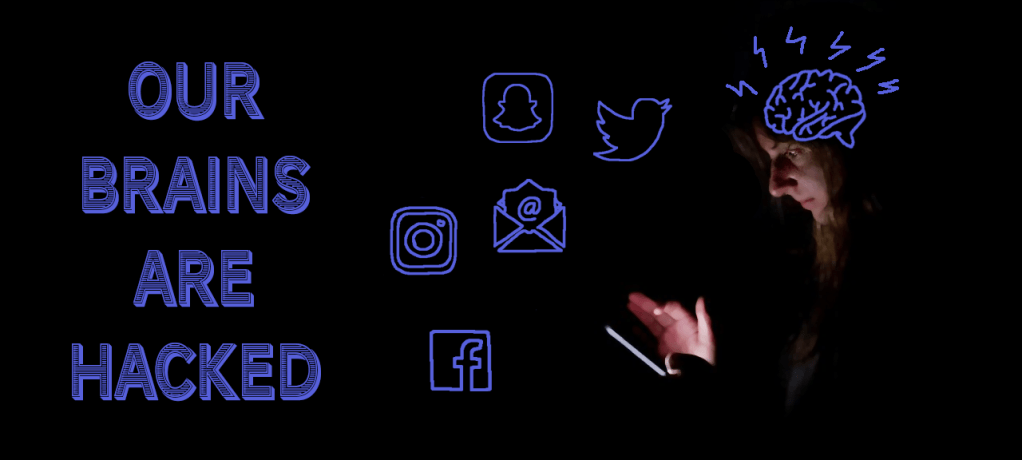
Our brains are hacked. In an age where information is more accessible than ever, we are conditioned by the tools we use to set aside our free will for that wonderful feeling we get when we get a text, give a like, and continue to scroll. This conditioning has been proven to cause a multitude of detrimental effects on our lives and work, and yet we keep feeding into our addictions and the tech companies we got our addictions from refuse to make change.
How did this happen? Why is nothing being done to stop this? Is there even a way to stop this?
Short answer: yes. Longer answer: yes, but it will require us to re-wire ourselves to tolerate doing hard work.
In Chapter Two of Cal Newport’s book Deep Work he argues the business trends like open offices, instant messaging, live collaboration, and a social media presences that are pushed onto workers and praised as good practice are, in fact, damaging our ability to do deep work and retain focus.
It’s bad enough that so many of these trends are prioritized ahead of deep work, but to add insult to injury, many of these trends actively decrease one’s ability to go deep.
Newport, C. (2016). Deep work. London: Piatkus. pp. 51
A study done by Gloria Mark covered in Episode Seven of Pardon the Interruptions found that when a person stopped what they were doing to check an email (those of whom where in the higher percentile checked it 435 time in a single day) it takes a significant amount of time to regain focus and get back on track with the original task. In another study of hers, she had her subjects turn off their email for a whole week and found that their focus levels rose and their stress levels decreased significantly.
She was not the only one to do a study to explore the effects of multitasking. In a 2013 study on 319 undergraduate students it was found that not only does multitasking effect a person’s ability to filter out irrelevant information and ignore distractions, but many of the subjects reported symptoms associated with anxiety and depression.
Even with these studies and so many more like them that prove the negative effects of multitasking and being always-available, businesses keep promoting this behavior (and often give punishment if it is not done) and we keep feeding into it.
Newport suggests that this embrace of new trends is an explicit example of Neil Postman’s idea of an internet-centric technopoly that was created in the 90’s: the idea that if something is high tech, that it is automatically good, so people and businesses will use it and eliminate other alternatives to it so that its use is simply not up for discussion.
Not only do we have the pressure from businesses and the cultural push towards tech, but we often follow the principle of least resistance. Newport argues that when we are working we will tend towards tasks that are the easiest to do in the current moment. This tendency means that in an environment where email and communication is seen as productive, it is perfectly acceptable to only spend time on communication, leaving little room for the deep work where quality comes from.
This idea is not exclusive to a work setting. Our entire lives are controlled by our communication via social networking. In the CBS 60 Minutes piece “What is ‘Brain Hacking?’” Tristan Harris, a former Google product manager, declares that your phone is a slot machine. Designers of apps create features and functions that have the sole purpose of making you want to use it more. He calls this type of developing “a race to the bottom of the brain stem” since these functions are simply taking advantage of user’s implicit emotions.
In the article “‘Our Minds Can Be Hijacked’: The Tech Insiders Who Fear a Smartphone Dystopia” Justin Rosenstein, the creator of the “like” button, shares how he does not use social media anymore just for that reason. He says that the addiction of constantly checking for notifications and being connected is causing us to have “continuous partial attention” and limiting focus and potentially IQ. He is particularly concerned for the future.
One reason I think it is particularly important for us to talk about this now is that we may be the last generation that can remember life before.
Lewis, P. (2017, October 6). ‘Our minds can be hijacked’: the tech insiders who fear a
smartphone dystopia. The Guardian. Retrieved from https://www.theguardian.com/technology/2017/oct/05/smartphone-addiction-silicon-valley-dystopia
It is becoming the case that only a handful of tech companies are the entities attempting to control every aspect of our lives. In Franklin Foer’s article “How Silicon Valley is Erasing Your Individuality” he discusses how these companies are not only in a race to become everyone’s “personal assistant”, but that they are against free will by using algorithms to “automate the choices, both large and small, we make as we float through the day.”
And we are letting it happen. Society is stuck in this mindset that all things new and technologically advanced must be good. The idea that instant communication and technology allows us to get more done in the day is true (think of all the emails that can be sent in a day!), but the quality of work is going downhill and deep work is becoming more and more rare.
Foer uses the analogy of processed foods. When they were first invented, TV dinners were the best – you could cook a yummy meal in no time! Processed foods became the norm since they were so efficient and cost-convenient, and here we are now in a country that is addicted to sugar and riddled with diabetes and obesity.
While it is probably impossible to stop the tech companies from using techniques to get you to come back since that is how they make their money, you can be more aware. Follow the steps of those tech insiders that don’t get high on their own supply. Use technology diligently and with purpose. Set boundaries for your communications. While it will require you to take the path of more resistance, the outcome will be better not only for your work, but for your well being.
 Emma Lao