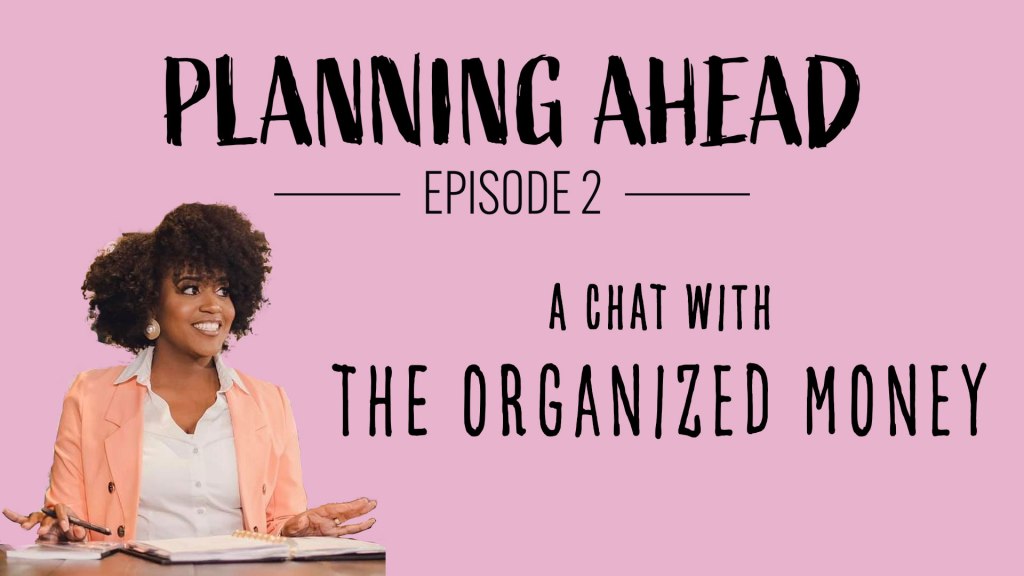
Last week I had the pleasure of interviewing Alaina Fingal from The Organized Money, a professional planner who was full of wonderful advice and insights when it comes to using a planner. In this post I will highlight some of the most valuable info she shared, but if you are interested in listening to the full interview check out the podcast here:
Digital Planning Does Not Always Work
Like many, Alaina’s first experience with using a planner was when her school provided her one to write down her homework assignments when she was in the 5th grade. When she got older, though, she felt as if she had to be more “adult” and switch to a more mainstream and professional method by using digital planning alternatives. This works for some, but for her it did not. At that moment she thought:
“Let’s just be us and go back to the planner.”
In our discussion we concluded that something is lost when you go digital. Using a paper planner every day sets up a routine and forces you to be more aware of how you spend every moment of your day.
“I’m more connected to what I have to do when I am writing out this to-do list.”
Be Kind to Yourself & Go Slow
Currently, Alaina is using seven separate planners to track her day. Do this mean that you have to do this? No! In fact, when she first began planning in 2018 she was using a single planner. As she continued to get in the habit of using her planner and refined her system to work optimally for her, she branched out. Even then, when she was a new mother, she stopped planning altogether.
A planner is not supposed to be a burden or something that you HAVE to do, it is a tool that should only help. So when it doesn’t help, step back and re-assess. Maybe the system you are using now isn’t right for you, or maybe you are simply doing too much.
“You have to know the seasons of your life.”
I have had a time where I had to step back and re-assess how I was using my Hobonichi Cousin. When the quarantine began last year, I completely dropped off on my daily journaling and habit tracking. At the time, I was super hard on myself, but looking back on it I realized it was just a different season. Once you are kind and forgiving to yourself, planning becomes much more joyful.
Trust Your System
One of Alaina’s biggest mistakes in her planning journey was giving into the FOMO. Whenever a new planning system dropped and it looked attractive, she would ditch her old method and try to adopt a new one, without asking herself if it was a system that fits her life or her style.
“I was afraid of settling into my system.”
It may take time to create a system that works for you, but once you have it and it is working trust yourself and the system. That’s not to say that there aren’t plenty of people out there who give wonderful advice about creating systems (Alaina and myself included), but be sure that you adapt whatever advice you follow to work for you.
Use Your Planner for Mental & Physical Health
In her planner, Alaina tracks what she calls “essential habits” – sleep, diet, and exercise. Unfortunately, these are aspects of life that many people neglect to attend to due to stress, busyness, or lack of direction. Having a planner to remind you to at least pay attention to these essential functions is a huge step toward making positive change.
Planning also makes room for more attention towards mental health. Alaina has a dedicated “faith planner” where she tracks her mood, meditation, scriptures, and prayers – by writing in this daily she is reminded to take time for herself and her mental state.
No matter what you are trying to improve, track, or organize in life, putting it in a planner will make it happen. If these tips helped you, consider following my blog or subscribing to my YouTube Channel. If Alaina’s insights interested you check her out too!
What do you like about planning in a paper planner as opposed to digital? Did any of these tips speak to you, or do you have any to share? Comment below – I would love to know your thoughts.
 Emma Lao