Dr. Dennis Richardson leads a busy life as a full-time professor at Quinnipiac University and one of the lead researchers for parasitology in the country. However, his day begins long before he starts his preparation for classes. Four years ago he and his family moved to a small farm in Meriden, CT where he discovered his love for breeding, milking, showing, and caring for Nigerian Dwarf Goats.






His interest in farming has manifested itself in many ways since he was a child born & raised in Arkansas. From owning a few cattle and horses, to moving to the Connecticut suburbs where he had a small garden plot and hen house, to establishing a real business with his hobby farm his sustainable, do-it-yourself lifestyle has fully manifested. He is dreaming of the day when he can retire and move back to the country so that he can live in a goat-filled paradise.
Photo narratives are becoming increasingly prevalent in journalism. As Eman Shurbaji explains in her article Photo narratives: Defining picture stories, essays and packages, “photos, unlike text, video or maps, have the potential to show an exact representation of an exact moment.” Adding a human face to an issue or situation can make it feel much less abstract and lead to more interest and change.
While design was an overlooked aspect of journalism before traditional media had at way to easily incorporate images, it has quickly become one of the most pivotal parts of planning and telling a story. Writing, editing, and design have now become “a single unit of thought” in journalism. Visuals are no longer an afterthought to a story – they are something that can clarify, engage, and convey the story to the audience with ease.
My goal for this short project was not as grand as James Nachtwey’s work and the many impressive visual journalism articles shared by Annie Schugart, but it was still something that is near and dear to my heart. I wanted to share the daily routine that my father has every morning – something that many people would not expect him to do, being a PhD in Biological Sciences and a well established professor. Like all of my documentary work, I wanted to show the raw, unfiltered story of what it is like to be a person in this world – including all of the weird little unexpected aspects of being human.
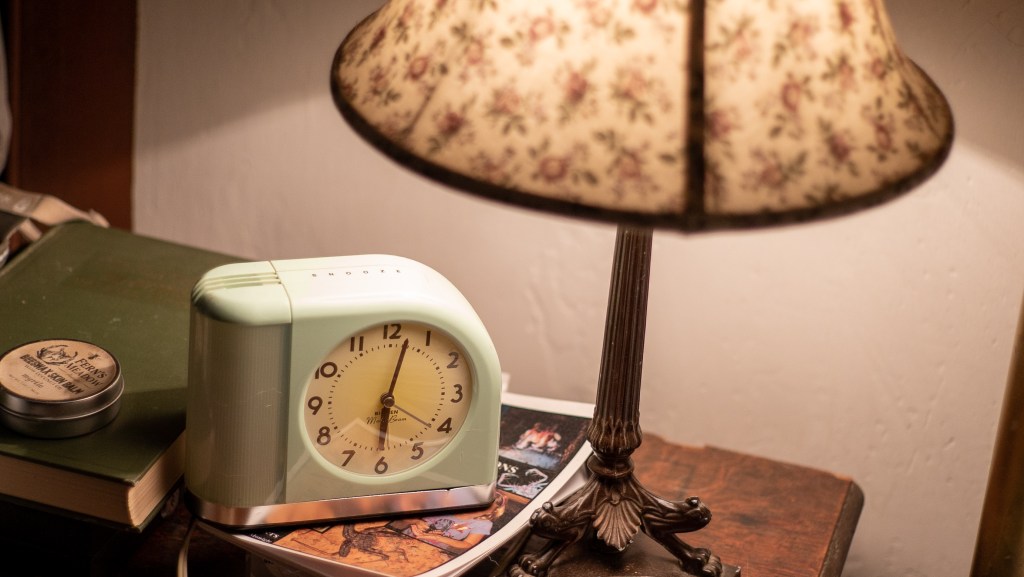
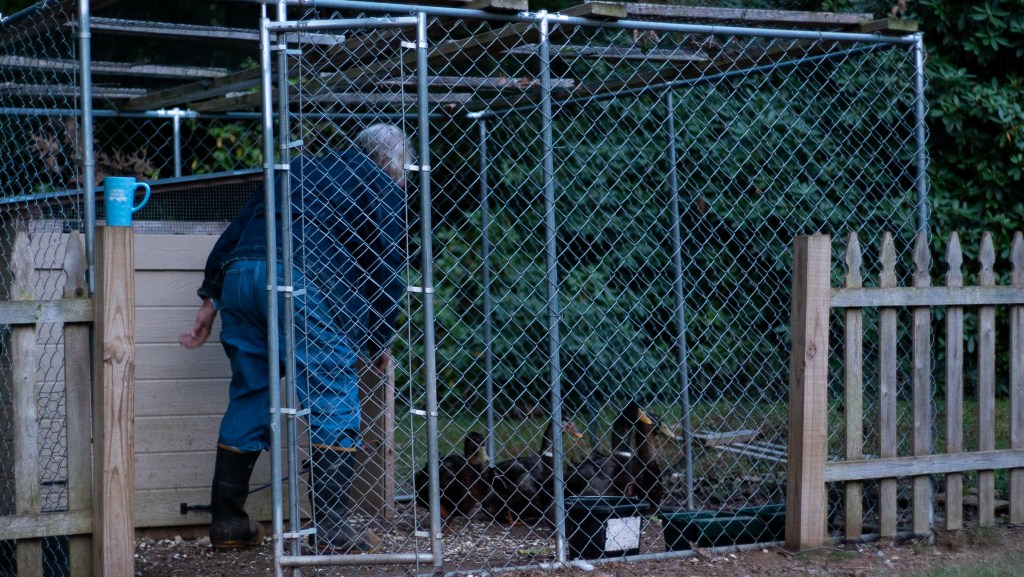
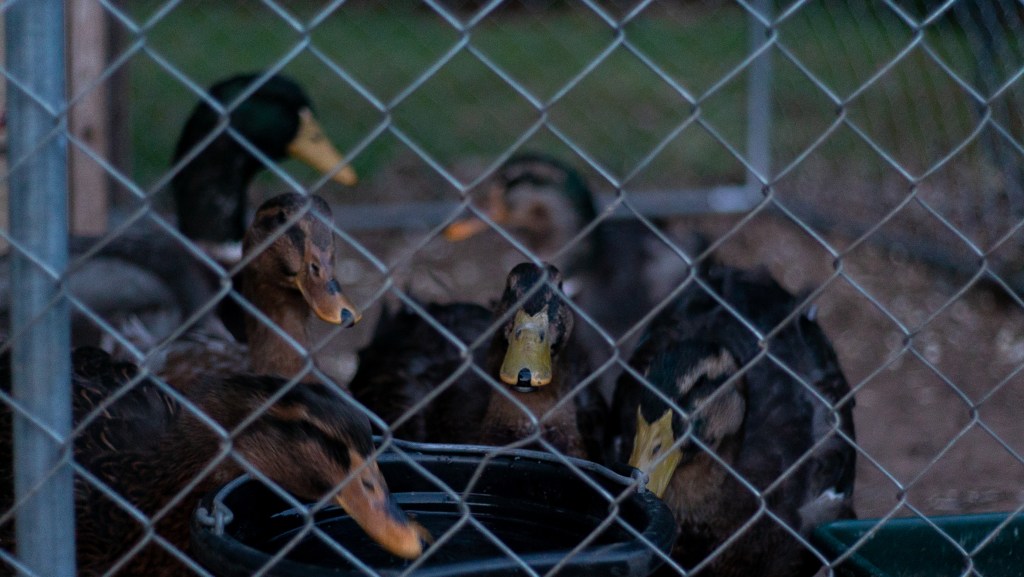
For the majority of these photos I am attempting to appeal to the viewer’s visceral response of seeing a person work closely with animals and what that entails. In the first image the light on the bedside lamp and time on the clock gives the immediate reaction that this is an early-riser. The image of the barn door being opened, the warm lights contrasting with the cool tone of dusk, shows that something is about to begin – in this case, morning chores.
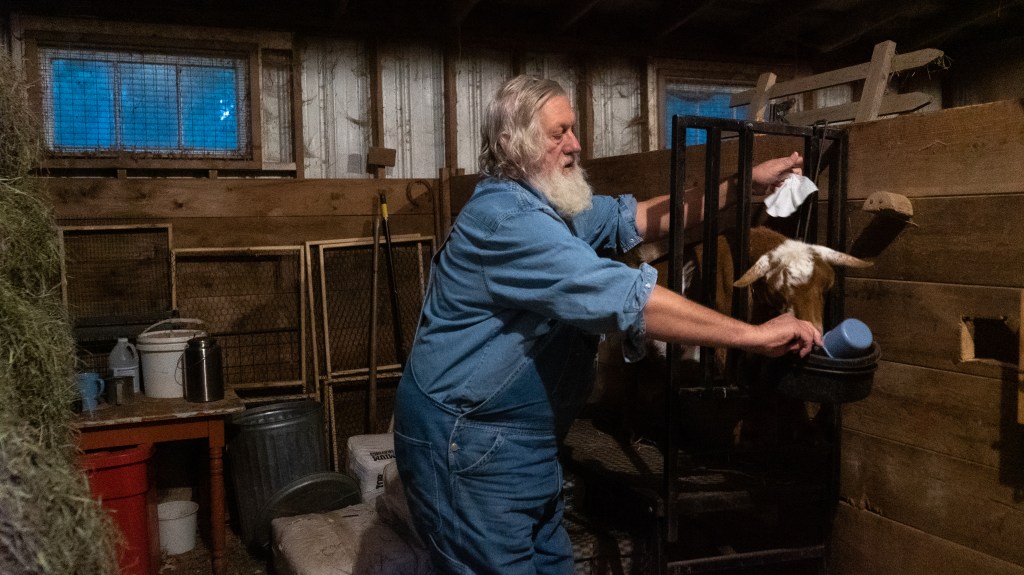
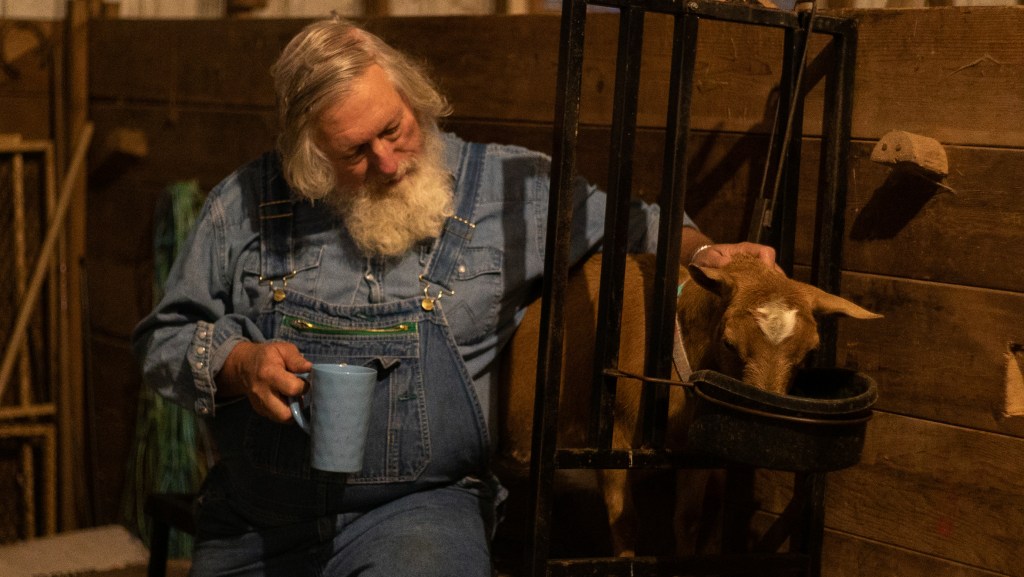
My favorite image, and that which I feel captures the most emotion, is the one where he is sitting beside Trixie, watching her eat. Not only does that orange glow of the barn lights add a friendly energy to the image, but the composition of everything being level to each other shows equality. My father, Trixie, and the camera are all at the same level – no entity has a dominant force over the other. This is also an instance of “capturing the moment” (an idea explained in Seth Gitner’s book) where the farmer does not see an animal as a tool, but as family.
Many of the techniques I used to create these images stems form my experience creating documentary films. Most of the angles I used were from a lower position – I wanted to be at the level of the action, not above it. I also did my best to be invisible. This was easier since I was working with my father who is comfortable with me and used to me taking pictures around him, but it was a little more difficult when it came to curious goats who want to approach me and chew on my camera strap. I had to adapt and switch from a 50mm to my 24-75mm so I could have more flexibility with close subjects.
I also kept The Four Principles of Visual Storytelling in mind as I did my shoot. I told my father to do his morning chores as usual – nothing was staged and it was all authentic (yes, he uses that coffee cup every morning). Emotion came into play in the shot with him and Trixie spending some quality time together, taking a break from all of the business in the morning routine. The narrative was extremely personal – there are very few biology professors who as goat-crazy and willing to wake up before dawn for their passion of goat farming.
While this story may not be as profound as many other works of photo journalism, it at least is something positive to see (when most people veer towards negativity in stories) and gives a good dose of humanity to the reader’s perspective on hobby farmers.
Campbell, David. “Why it’s time for visual journalism to include a solutions focus.” Medium, 22 Jan. 2018, https://witness.worldpressphoto.org/why-it-is-time-for-visual-journalism-to-include-a-solutions-focus-5be15aec3afc. (Module 4)
Cao, Jerry. “Web design color theory: how to create the right emotions with color in web design.” The Next Web, 7 April 2015, https://thenextweb.com/dd/2015/04/07/how-to-create-the-right-emotions-with-color-in-web-design/. Accessed 4 Sept. 2020. (Module 2)
Dahmen, Nicole. “How to Do Better Visual Journalism for Solutions Stories.” MediaShift, 22 Nov. 2017, http://mediashift.org/2017/11/visually-reporting-solutions-stories-newsrooms-classrooms/. (Module 4)
Garcia, Mario R. “Digital storytelling, Part One: The fusion of writing/editing/design.” Garcia Media, 19 Jan. 2017, https://garciamedia.com/blog/digital_storytelling_part_one_the_fusion_of_writing_editing_design/. (Module 4)
Gitner, Seth. Multimedia Storytelling for Digital Communicators in a Multiplatform World. New York, Routledge, 2016. (Module 1)
Lien, Jade. “The Four Principles of Visual Storytelling.” Action, 21 Dec. 2019, https://actiongraphicsnj.com/blog/4-principles-visual-storytelling/. (Module 1)
Nachtwey, James. “My wish: Let my photographs bear witness.” TED, March 2007, https://www.ted.com/talks/james_nachtwey_my_wish_let_my_photographs_bear_witness. (Module 4)
Norman, Donald A. & Ortony, Andrew. “Designers and Users: Two Perspectives on Emotion and Design.” “Foundations of Interactive Design”, Nov. 2003, http://projectsfinal.interactionivrea.org/2004-2005/SYMPOSIUM%202005/communication%20material/DESIGNERS%20AND%20USERS_Norman.pdf. Accessed 4 Sept. 2020. (Module 2)
Sagolj, Damir. “7 Photojournalism Tips.” Thomson Reuters Foundation, 2012, https://vimeo.com/48815231. (Module 4)
Schugart, Annie. “The Best in Interactive Multimedia Journalism 2017: Pushing the Limits of Storytelling.” Medium, 1 Jan. 2018, https://medium.com/@aschugart/the-best-in-interactive-multimedia-journalism-2017-pushing-the-limits-of-storytelling-e2ccdec8e576. (Module 4)
Shurbaji, Eman. “Photo narratives: Defining picture stories, essays and packages.” Medium, 17 Dec. 2014, https://medium.com/learning-journalism-tech/photo-narratives-d77b812f99dd. (Module 4)
 Emma Lao