In this blog post I will explain the four laws of habit creation from James Clear’s book Atomic Habits. To see the video version of this post, watch the video below!
Law #1: Make the Habit Obvious
The first law of creating a habit is to make it obvious. The first way you can do this is to create an implementation intention. Simply fill out this statement:
“I will [BEHAVIOR] at [TIME] in [LOCATION].”
One of the first habits I strive to do daily is reading, so my implementation intention for my reading habit looks like this: “I will read at 8:30 AM in bed.” Next, you can use habit stacking to keep the momentum going:
“After I [CURRENT HABIT] I will [NEXT HABIT].”
My ideal day also starts with a session of yoga, so my habit stacking looks like this” “After I read, I will do yoga.”
One of the most important steps in this law is to set up your environment for success. Make the habits you’d like to do as easy to reach as possible and those you’d like to break as far away as possible. It is natural for us to take the path of least resistance, which is why we can easily find ourselves scrolling through social media for hours on end – because it is easier to do that than to get what you need to get done. So, do the work to make sure that path of least resistance the is the one you actually want to go down.
Law #2: Make the Habit Attractive
One of the most popular ways of making a habit more attractive is to reward yourself with something after you have completed it. If you’d like you can even create another statement to clearly define the reward:
“After I [HABIT] I will [REWARD].”
Continuing with my ideal morning, I will only drink coffee once I have already read and finished some yoga.
You can also join a culture or group where your target habit is a normal practice. Even having a single accountability partner can help you with that, but in larger groups you may learn more and be inspired about what you are trying to make a regular practice.
If one of your habits happens to be journaling (especially using a Hobonichi) check out my Facebook Group which has discussions on journaling, productivity, creativity, and habits.
One final way you can make your habit more attractive is to create a motivation ritual. It can be drinking a cup of coffee, doing a stretch, listening to a certain song – anything that gets you pumped and ready to get to it. Personally, I love going on walks with my dog. The combination of sunlight and exercise energizes me and simply makes me happy (can I get a hell yeah for Spring finally arriving?).
Law #3: Make the Habit Easy
Again, environment plays a key role in this law. Make sure that you can get to your good habits in as few steps as possible and try to make your environment bad habit-free. An excellent way to do this is to simply not buy things that feed into certain habits or to download software to lock you out of certain programs during an allocated time. You may think that these steps sound excessive, but humans underestimate how little self-control we actually have.
Try to automate habits that you can as well. You can’t do this for every habit of course, but for every habit that is automatically done there is another that you can focus on.
If you are having trouble actually sitting down to do your habit, try out the 2-minute rule. This is when you only plan to do 2 minutes of whatever habit it is you want to do. The reality is that once the timer goes off, the majority of people will want to continue. Sitting down and getting started is the biggest battle there is when it comes to habits.
Law #4: Make the Habit Satisfying
Again, it is important to give yourself some positive reinforcement after you complete a habit. Give yourself a small reward each time you complete a habit so that you equate that habit with positive emotion.

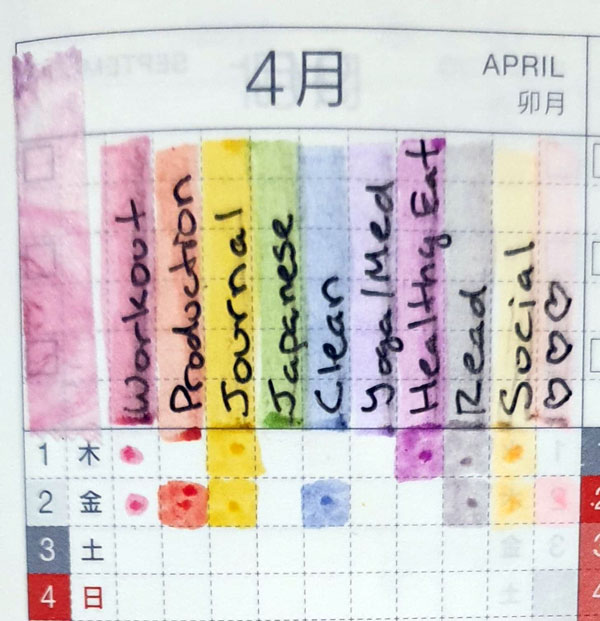
A great way to make a habit super satisfying is to keep track of it in a habit tracker. I am pleasantly surprised with how full mine has been lately after I became serious about following the advice from Atomic Habits.
While all of these tips have been helpful to me, it is also important to know that this is not something that comes easily. Sometimes you will have weeks where you are on a roll and being super productive, and others where the habit tracker is left completely blank. This is normal and it is super important to be kind to yourself. If you drop off (like I did for 2 months straight when the pandemic began) just know that in time you will breathe, relax, re-envision, and plan how to bounce back.
If you enjoyed this post, consider following my blog and subscribing to my YouTube channel. Of course, if you would like to learn more about habits, check out Atomic Habits by James Clear – I’ve only scratched the surface in this post.
What tip did you find most helpful? Are there any habits that you are having trouble maintaining that you might have a plan to change? Leave a comment below!



 Emma Lao