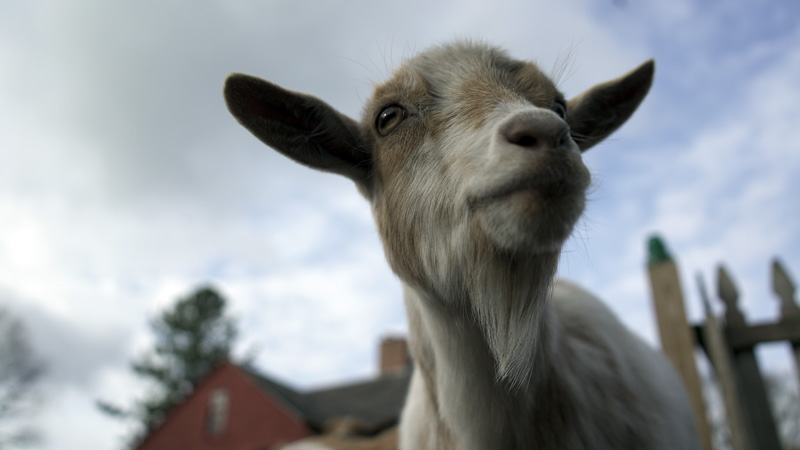
This week I reviewed the basics of visual composition and pre-production to prepare for the creation of my own Montage about my family’s farm, Fern’s Meadow.
Reading & Writing: The Basics of Composition
The first research I did to review the basics of composition was from The Bare Bones Camera Course for Film and Video by Tom Schroppel. While I knew almost all of the content he covered since this was the first book I read in my undergraduate education, it was still a decent reminder (and a great text for those who don’t know) about the basics of cameras, composition, camera moves, and montages. While his notes on exposure, temperature, ISO, lenses, depth of field, rule of thirds, balance, angles, frames, leading lines, and backgrounds were mostly old knowledge, I did take note of his definition of montages and the fact that every shot should be clearly different from the one before it.
I also looked at the article “Video Pre-Production Planning Checklist” by Jimm Fox. This article outlines the steps that should be taken for each video project, beginning with a clearly defined objective, defining your audience, and your key messages, then going on to create a treatment, storyboard, and schedule/production plan. This coming montage shoot will require each of these steps since it will be serving as a promotional video for my family farm.
Finally I read Mark R Robertson’s article “Storyboarding Tips: How to Plan & Visualize Your Next Video”. In this article he outlined the fact that storyboards are a necessary part of the production process since they serve as a blueprint for your video, but you shouldn’t worry about being artistic as long as the idea gets across. It should not only include visualizations, but technical details, content, and verbal delivery for each shot as well.
Research to Inform: Composition Done Right
Next I looked to some of my favorite videos to assess how they use the basic principles of composition successfully.
This is a subtle, yet interesting use of “frames within frames”. A frame within a frame is when the subject of the shot is enclosed by a natural frame – whether than be a door, tree branches, windows, arches, or others. In this scene of Kill Bill: Vol. I there are two frames within frames – one that encloses Uma Thurman and another that encloses the daughter of the woman who was killed. Tarantino also uses angles to show the difference of power, the camera is looking down on the girl, showing how vulnerable and scared she is in that moment.
This might be my favorite music video just because of how visually appealing it is. There are many elements of composition used in this, but one of the most prominent is the constant use of the rule of thirds. Almost every shot aligns where the subject is taking up either 1/3 or 2/3 of the grid. When it isn’t, the subject is is much more prominent (like the rose in the glass or when Grimes is in the tub of….tar? black paint?).
I love Samsara for the same reason as the previous video – every shot is gorgeous and so well-composed. Many of the shots in this documentary have an interesting use of angles for perspective. The entire point of this documentary is to show cultures, practices, and rituals from different perspectives and since there is not one word of dialogue, the camera has to do all of the talking (and it does such a good job at it)! In this trailer, the shots at 0:22, 0:27, and 0:49 especially stand out.
Finally, I found a favorite montage of mine – the trailer for Park Chan Wook’s film The Handmaiden. There is such a large variety of shots that do an incredible job of portraying the tone of the film. After watching these videos, I was full of creative energy and ready to get creating!
Create: Montage Pre-Production
My first step in the pre-production process was to practice the basics of composition. The this first document I compiled shots from my location shoot that followed guidelines for composition rules. I am not super proud of the photos themselves since I could only take about 3 hours of being outdoors since it was freezing but I am feeling more confident about what I will do for when I film my montage.
I also completed a pre-production planning document that included a creative brief, notes, a script, and my storyboard. Now that I have everything mapped out I am feeling confident about filming and editing my montage!
 Emma Lao
One response to “Visual Composition I: Montage Pre-Production”
[…] week’s work in pre-production came to fruition this week with the final video montage. Check it out […]
LikeLike